

Troubleshooting Door Closer and Hinge Issues in Pedestrian Doors
Pedestrian doors do more than provide access. They play a critical role in safety, performance, and daily flow. When a door won’t stay open, it slows traffic, disrupts accessibility, and creates safety risks. For facility managers, building owners, and maintenance teams across retail spaces, warehouses, government facilities, and mixed-use properties, this is one of the most common issues we solve every day.
In most cases, the issue comes back to two components: the closer and the hinges. Knowing how these components work gives you a clear edge in spotting issues early and determining when professional service is required.
This guide breaks down the most common issues affecting pedestrian doors, including hollow-metal doors, man doors, storefront doors, and entry doors, and shows you how to solve them quickly and effectively. It also highlights when it is time to call in professionals to restore safe, reliable operation.
What’s Behind a Pedestrian Door That Won’t Stay Open?
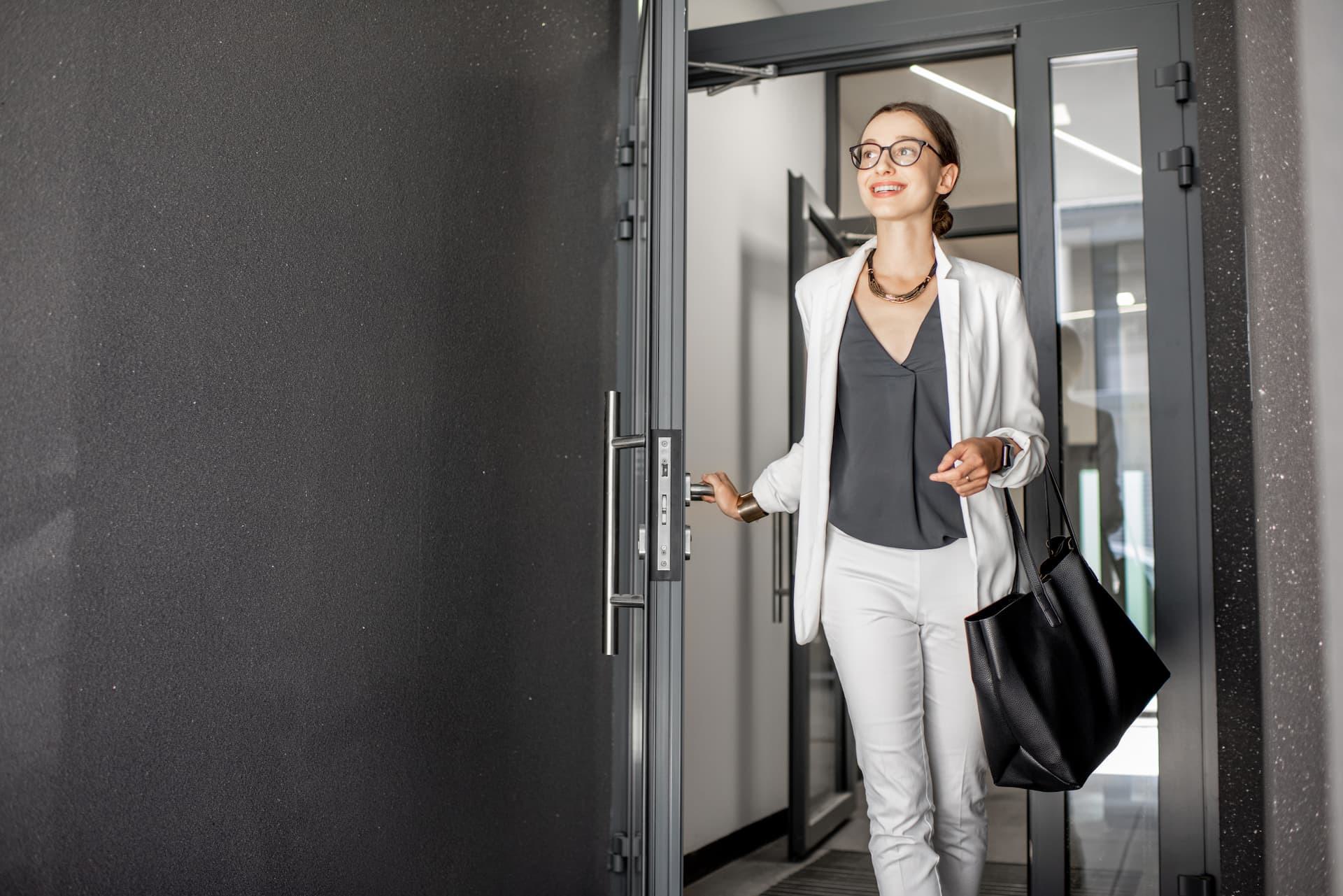
A properly functioning pedestrian door should operate smoothly, consistently, and without guesswork. If a door is designed to stay open, even temporarily, it should do so reliably.
When a door closes on its own or refuses to hold its position, the issue often comes down to:
- Unadjusted or failing door closers
- Worn or damaged hinges
- Improper installation or alignment
- Environmental factors such as wind or air pressure
While external conditions can play a role, closer and hinge problems are the most frequent culprits in commercial environments.
Understanding Door Closers and Their Role
Door closers control how quickly and safely a door opens and shuts, making them critical for safety and compliance. In commercial settings, they are essential for safety, fire compliance, and energy efficiency.
Types of Door Closers
- Surface-mounted closers
- Concealed closers
- Floor-spring closers
Each type is engineered for specific environments and performance demands, but all rely on internal hydraulic systems and adjustable valves to function correctly.
Common Door Closer Issues That Prevent Doors from Staying Open
1. Incorrect Tension or Adjustment
The main culprit is improper tension or adjustment settings. If the closer is set too strong, it forces the door shut, even when users expect it to stay open.
Symptoms include:
- Door closes aggressively
- Difficulty holding the door open manually
- Inconsistent operation
Adjustment valves control sweep speed, latch speed, and backcheck. If these are out of balance, the door will not behave as intended.
2. Faulty Hold-open Mechanism
Many commercial closers include a hold-open function, either mechanical or electromagnetic. When this feature fails, the door will not stay open at all.
Possible causes:
- Worn internal components
- Damaged hold-open arm
- Electrical failure in automatic systems
In facilities that rely on accessibility or high foot traffic, a malfunctioning hold-open mechanism can disrupt operations quickly.
3. Hydraulic Fluid Leaks
Door closers rely on hydraulic fluid to regulate motion. When seals fail, fluid leaks out and performance deteriorates.
Signs of a leak:
- Oil residue on the closer body
- Door slams shut unexpectedly
- Loss of resistance when opening
Once a closer starts leaking, replacement is typically the only reliable fix.
4. Improper Installation or Positioning
Poor installation will stop the closer from distributing force properly. This often prevents the door from staying open and can cause uneven movement.
Look for:
- Misaligned arms
- Loose mounting screws
- Incorrect mounting configuration
Professional installation ensures the closer is matched to the door size, weight, and usage.
The Role of Hinges in Door Performance
Closers control motion, while hinges carry the load and keep everything aligned. Even the best‑adjusted closer won’t fix failing hinges.
Commercial pedestrian doors often use heavy-duty hinges designed for high-traffic environments. Over time, wear and tear can impact their performance.

Common Hinge Problems That Affect Door Stability
1. Worn or Loose Hinges
High traffic accelerates hinge wear over time.
Symptoms include:
- Door sagging or dragging
- Uneven gaps between the door and frame
- Difficulty keeping the door in a fixed position
Loose hinges often cause additional strain on the door closer, accelerating wear.
2. Hinge Misalignment
When hinges are not aligned correctly, the door may shift out of position. This affects how the closer operates and can prevent the door from staying open.
Causes include:
- Improper installation
- Structural settling
- Impact damage
Even minor misalignment compromises performance.
3. Damaged or Bent Hinges
Physical damage from carts, equipment, or heavy use can bend hinges out of shape. This often leads to inconsistent door movement and difficulty maintaining an open position.
4. Inadequate Hinge Capacity
Not all hinges are designed for heavy or oversized doors. Using hinges that are not rated for the door’s weight might result in premature failure.
For hollow-metal doors and large entry doors, heavy-duty or continuous hinges may be required to ensure durability.
Environmental Conditions That Affect Door Operation
In commercial and industrial environments, external conditions intensify existing closer and hinge problems.
Wind Pressure
Strong wind can push against storefront and entry doors, overcoming the closer’s hold-open setting.
Air Pressure Differences
HVAC systems can create pressure imbalances that cause doors to close unexpectedly.
Temperature Changes
Extreme Canadian weather can affect hydraulic fluid viscosity and metal expansion, leading to inconsistent performance.
While these factors are not always the root cause, they might worsen existing mechanical issues.
Why Professional Diagnosis Matters
At first glance, adjusting a closer or tightening a hinge seems simple. However, commercial door systems are more complex than they appear.
Improper adjustments often lead to larger, more expensive issues, including:
- Voided warranties
- Compromising safety compliance
- Accelerated component wear
- Creating accessibility barriers
With decades of hands-on experience, our technicians assess the entire system including door weight, usage patterns, environmental factors, and compliance requirements to get it right the first time.
Preventative Maintenance Is Key
Proactive maintenance is the most effective way to prevent disruptions.
A comprehensive maintenance program includes:
- Inspecting closers for leaks and wear
- Checking hinge alignment and integrity
- Testing door operation under normal conditions
- Adjusting components for optimal performance
Regular servicing keeps pedestrian doors functioning reliably and extends the lifespan of critical hardware.
To keep your doors operating at their best, explore professional pedestrian door maintenance services.
When to Repair or Replace Door Components
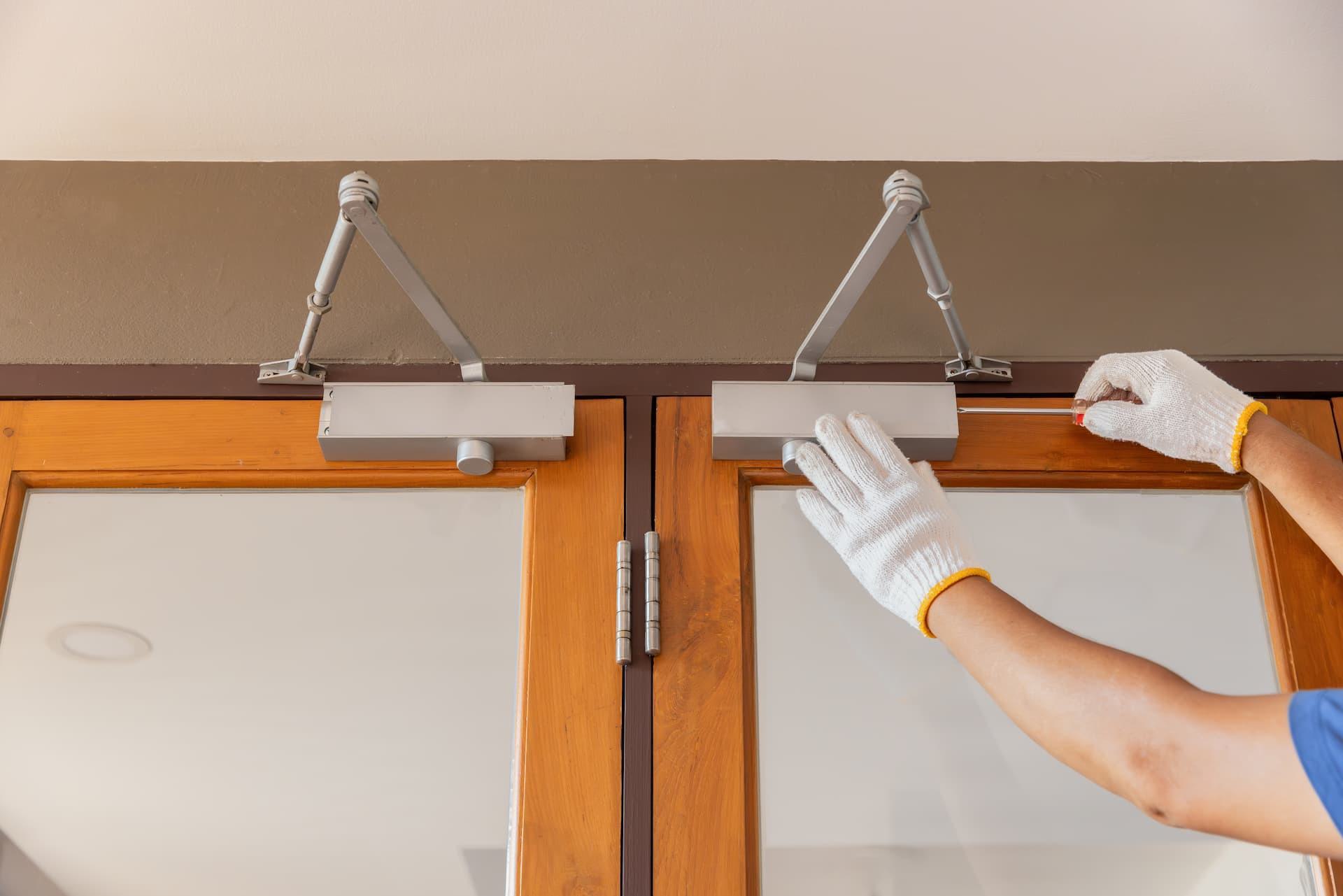
Knowing when to repair versus replace is critical to cost efficiency and long-term performance.
Repair is appropriate when:
- Components are unadjusted but not damaged
- Minor wear is present
- Hardware is still structurally sound
Replacement is necessary when:
- Closers are leaking or failing internally
- Hinges are bent, cracked, or heavily worn
- Components are not rated for the door’s application
Timely replacement prevents more serious issues, including door failure or safety risks.
If your facility is experiencing recurring door issues, consider professional pedestrian door repair services to restore functionality quickly and safely.
Supporting Safe, Smart Commercial Operations
In commercial buildings, pedestrian doors are integral to safety and operations. They are part of your safety infrastructure, accessibility strategy, and operational flow.
When doors fail to stay open as intended, it is often a sign of underlying mechanical issues that require attention. Door closers and hinges function as a single system. When one component fails, it affects the whole.
With over 55 years of experience and one of Canada’s most extensive product selections, Creative Door Services brings proven expertise, dependable service, and in-depth product knowledge to every project. From storefront doors in retail environments to heavy-duty man doors in warehouses, each solution is thoughtfully selected and built to perform in real-world conditions.
Supporting Reliable Door Performance in Commercial Spaces
Diagnosing why a pedestrian door will not stay open starts with understanding the core components involved. Door closers and hinges are the primary factors in most cases, and addressing their condition early will prevent costly disruptions.
Facility managers and building owners who take a proactive approach to maintenance benefit from improved safety, smoother operations, and longer-lasting equipment.
When in doubt, trust experienced specialists who can diagnose and resolve issues quickly and correctly. Smart, solution-oriented service ensures your doors perform as they should; every time.
For help diagnosing and resolving door issues, contact one of our locations in Kelowna, British Columbia; Vancouver, British Columbia; Calgary, Alberta; Edmonton, Alberta; Fort McMurray, Alberta; Regina, Saskatchewan; Saskatoon, Saskatchewan; and Winnipeg, Manitoba.